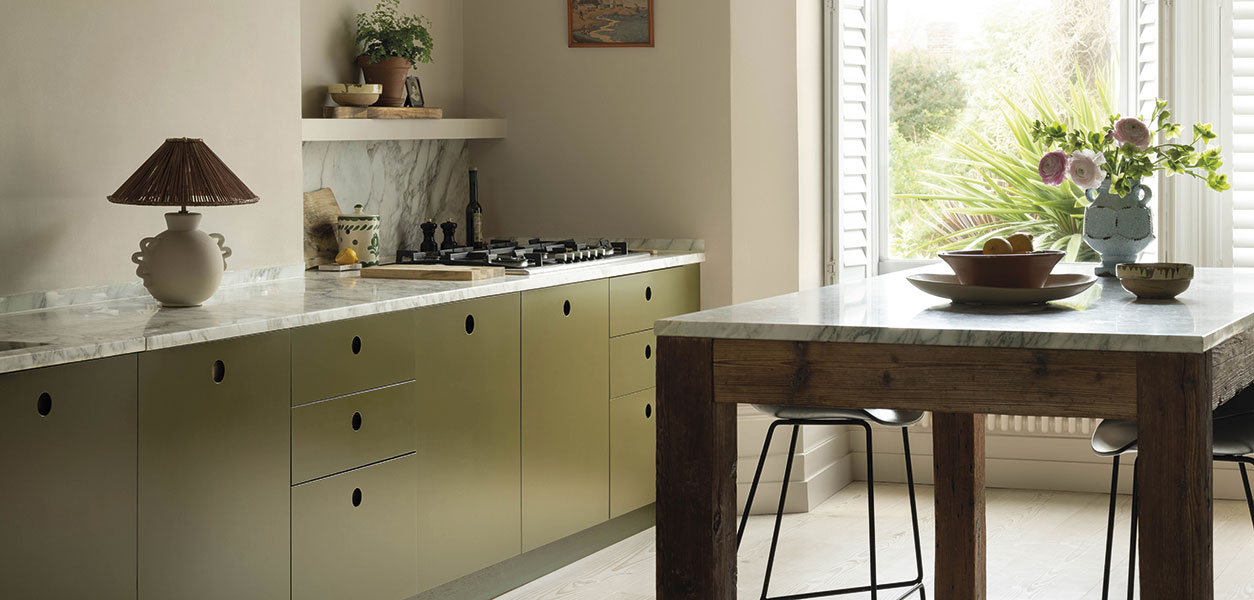



I hear a lot about the importance of layering lighting, but how does it work in practice?
Interiors Association member Sarah Costelloe offers her expert advice.
Lighting is important to how a home looks and functions, but it’s also important to note how it supports the body. Light plays an essential role in regulating our circadian rhythm (or body clock). It supports our energy, our sleep, and our mood. The cool bright morning light signals to the body that it’s time to wake up and focus. In the evening, the gradually softening light tells the brain to wind down because it’s time to rest. The artificial lighting in our homes should echo these rhythms as much as possible. The first and easiest step is to introduce dimmer switches throughout the house. Standard dimmer switches have been around for decades, but LED technology has opened the door to many more possibilities, including lightbulbs that can change colour temperature. Using a dimmer switch, a remote control or an app, you can dial a lightbulb up to a bright whiter light or down to a softer golden tone. Colour temperature is measured in kelvin and I’d always aim for a warm tone (2,700-3,000 kelvin) as anything above that can look very clinical in a home. Keep it consistent throughout the house. Sometimes people mix the colour temperature in a space and it makes the room feel very unsettled.Read more in the April issue…