


The Art of Layering
Our gardening guru Conrad McCormick explains how to add depth and interest with clever layering.
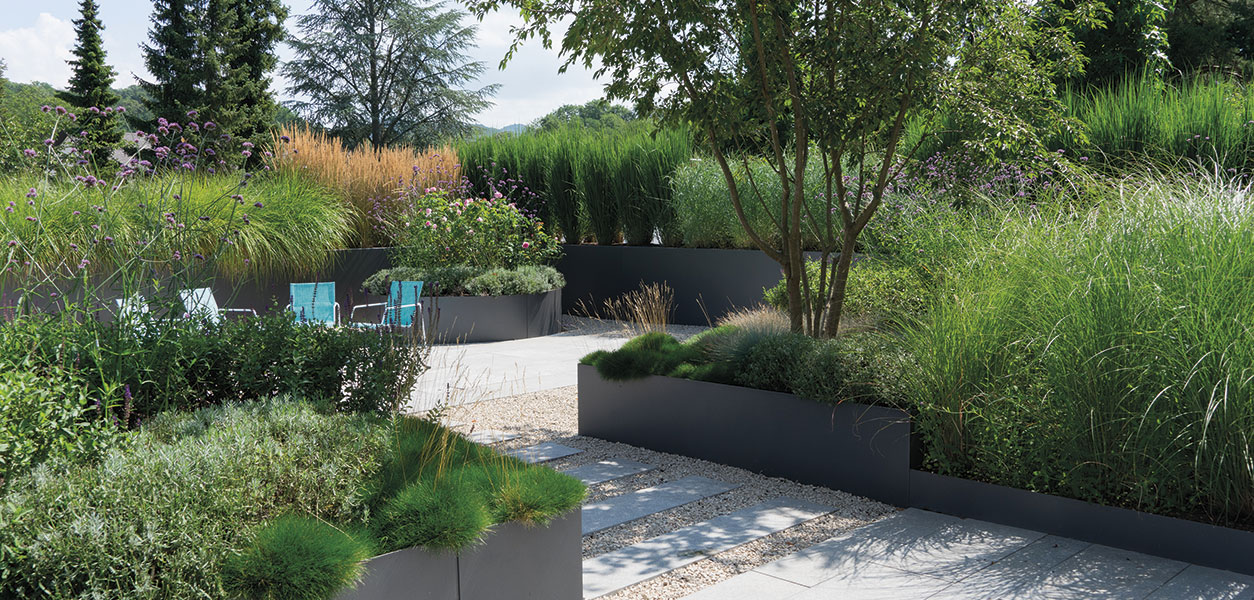
The most compelling gardens are not flat compositions, but spaces built in layers of height, texture and foliage. By thinking in terms of canopy, mid-layer and ground cover, even the simplest plot can be transformed into a richer, more immersive space. One of the quickest ways to spot a garden that lacks presence is to look at it from different angles, from the front, the rear and the sides. Too often, everything sits at the same height, politely spaced, each plant behaving itself. Perfectly nice, perfectly tidy, and perfectly forgettable. The gardens that stop us in our tracks do something very different. They are built in layers. Not just colour layered on colour, but height on height, texture against texture, with plants overlapping and interlocking like a well-rehearsed orchestra. It is this vertical structure that gives a garden depth, atmosphere, and that elusive sense of being immersed rather than simply observing. Layering is not complicated, but it does require a shift in how we think about planting. Instead of asking what plant will go in that gap, we start by asking what role it needs to play.Read more in the March issue…